

August 5 Dr. Muhammad Yunus was supposed to be tried in a Dhaka court. He could have been jailed for life in a corruption case. However, the wheel of his fortune turned in just two days.
Nobel-winning economist and social entrepreneur Dr. instead of facing trial. Yunus was appointed head of the military-backed interim government of Bangladesh. But he has to burn a lot of wood and straw to rebuild Bangladesh in this unstable time.
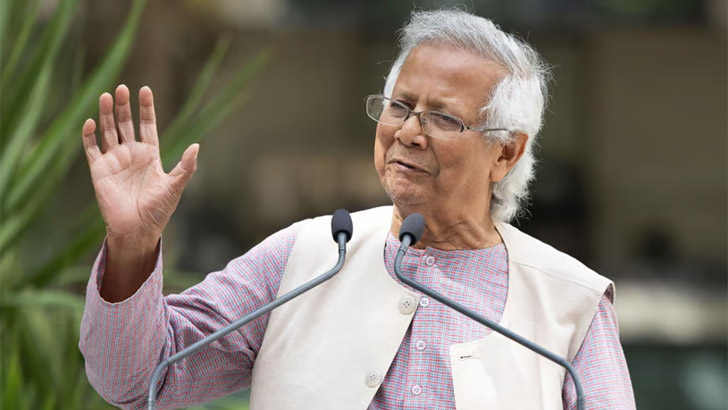
This is how Dr. The influential British magazine The Economist described the story of Yunus. The magazine also claimed in the analysis that he will face 3 main challenges while running the country.
The first challenge
According to The Economist, after being sworn in as expected on August 8, Dr. Yunus' first task will be to bring back peaceful politics in the country. The student movement, which started demanding quota reform in government jobs in the country, turned into a movement to bring down the government.In the face of protests, the court finally ruled in favor of quota reform. But it was too late. Meanwhile, the agitation for quota reforms fueled public frustration against years of Sheikh Hasina's rule.
The vandalism of his residence earlier this week and the attacks on the police station and the houses of Awami League ministers reflected the protestors' anger. Referring to the risk of continued unrest, Dr. urged the countrymen to calm down on August 7. Yunus.
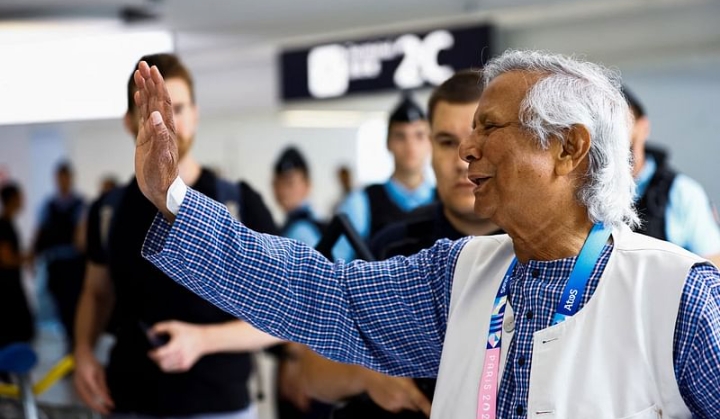
He said to the countrymen, "Keep calm and help the people around you to stay calm."
The second challenge
Dr. Yunus' next task will be to reorganize the politics of Bangladesh. And for this, it is not enough to organize a new election quickly. He needs to do more. The country's courts and other democratic institutions must be reformed. The influence of political parties should be reduced in universities.
They have been a source of instability for a long time. At the same time new political parties should be given time and opportunity to organize themselves. Without these steps, a new election could easily go in favor of Islamist groups or a reorganized BNP. But these forces also suffer from factionalism.
The third challenge
Dr. The third major challenge for Yunus is to create a complex geopolitical landscape. Bangladesh's largest neighboring country, India, will be more affected by this change. The country has a close historical relationship with the Awami League. India sees the Awami League as a secular force against fundamentalists in the region.

Over the past decade, India has expanded trade, energy and military ties with Sheikh Hasina's government to counter China's growing influence in South Asia. Opposition to India will increase in the minds of many Bangladeshis who do not support Sheikh Hasina due to her sheltering the exiled 'Iron Manbi'.In addition, Delhi is under pressure to help protect the estimated 10,000 Indian nationals in Bangladesh, as well as the 1.4 million Hindu minority.
Indeed, Bangladesh's interim government and any successor may lean more on China than Sheikh Hasina for financial and other support. Not that he was hostile to China. During his rule, China became Bangladesh's largest trading partner, second largest foreign investor, third largest lender and a major source of military technology. Still, Sheikh Hasina was careful to build relationships with India and other partners to avoid becoming too dependent on China.

The analysis also says that new and liberal forces did not emerge in Bangladesh during the regime of the former prime minister. But Islamist groups have grown stronger in recent years. They too may now seek to fill this leadership void. But this challenge has become bigger. Because, Bangladesh has now become an important geopolitical field between China, India and the West.

 2294.039 SRY